The Second World War: How the World Entered Its Deadliest Conflict—and What Came After
Finding voices available in your browser…
The Second World War did not erupt from one isolated event. Years of grievance, dictatorship, aggression, appeasement, and failed diplomacy prepared the ground. Follow the conflict from Poland to Hiroshima—and examine the world rebuilt from its ruins.
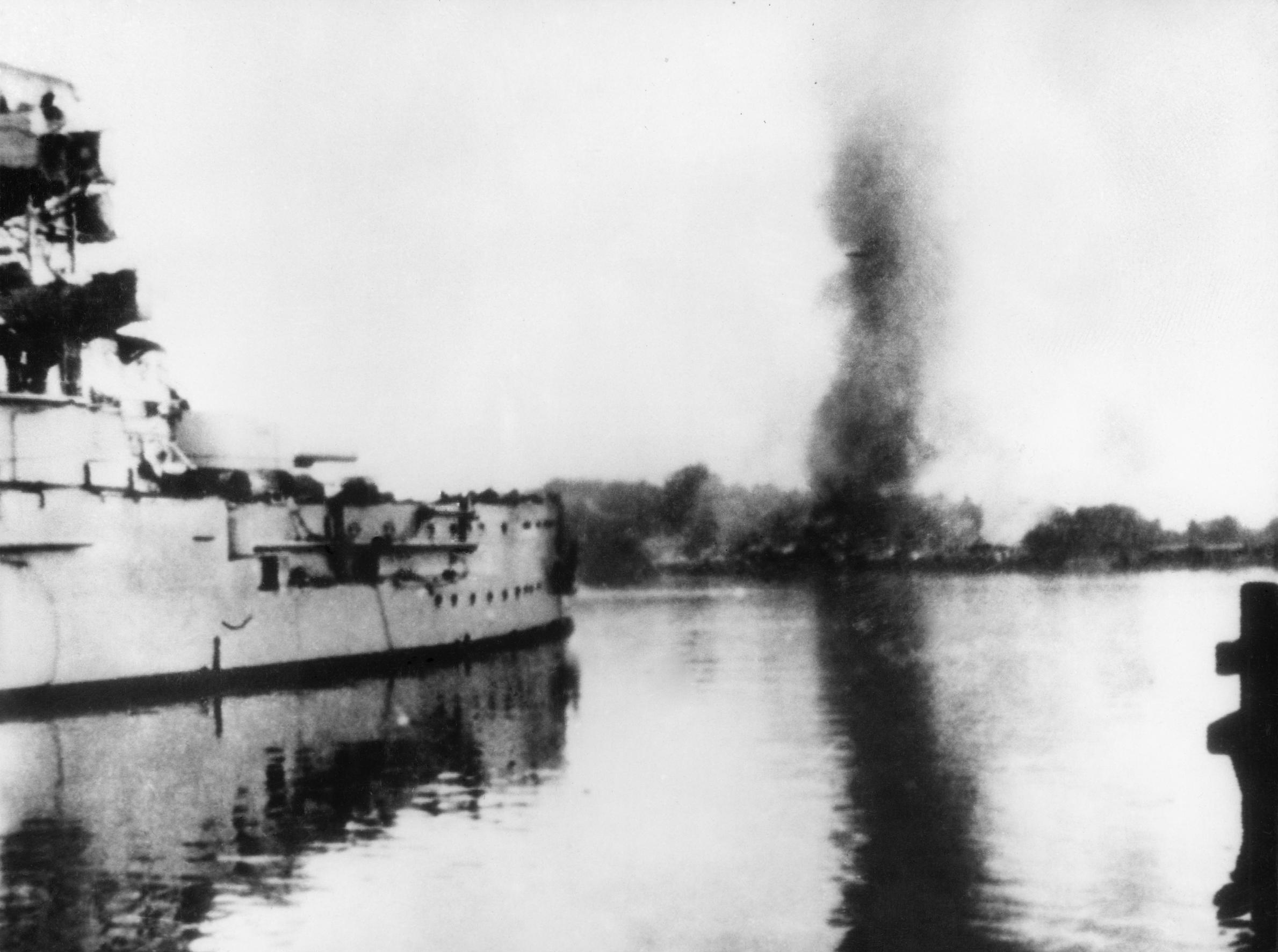
At dawn on 1 September 1939, German forces crossed into Poland. Aircraft struck airfields, railways and towns. Armoured columns pushed through border defences. The battleship Schleswig-Holstein, already positioned near the Polish coast, opened fire on the military depot at Westerplatte.
Within hours, Europe understood that a crisis had become a war.
Yet the Second World War did not begin in a single morning. The invasion was the match, but the ground had been prepared for years: the unresolved wounds of the First World War, the Great Depression, the rise of dictatorships, racist ideology, territorial ambition, Japanese expansion in Asia, Italian conquest in Africa, and the repeated failure of international powers to stop aggression while it was still limited.
By the time the conflict ended in 1945, it had reached Europe, Africa, Asia, the Atlantic, the Pacific and the Arctic. Soldiers fought across deserts, cities, oceans and islands. Civilians became targets on an unprecedented scale. Nazi Germany and its collaborators murdered six million Jews in the Holocaust and persecuted or killed millions of other victims. Cities were burned from the air. Entire populations were displaced. Two atomic bombs revealed that humanity had gained the power to destroy a city in moments.
The war lasted a little more than six years in its conventional European dating—from 1 September 1939 until Japan's formal surrender on 2 September 1945—although the Asian conflict had begun earlier. It became the deadliest war in recorded history.
This is the story of how it started, who fought, how it changed, how it ended, what it built and destroyed, and why its warnings still matter.
1. A Peace That Did Not Heal the Wounds
The First World War ended in November 1918 after killing millions and shattering empires. The victors attempted to build a new order through the Treaty of Versailles and the League of Nations. Germany lost territory, accepted restrictions on its armed forces and was required to pay reparations. Many Germans experienced the settlement not simply as defeat but as humiliation.
Versailles did not mechanically cause another war. Political choices still mattered. But the treaty left grievances that extremists could exploit, while the League of Nations lacked both universal participation and reliable power to enforce its decisions.
The Great Depression after 1929 intensified unemployment, fear and political anger. In Germany, Adolf Hitler and the National Socialist German Workers' Party—the Nazis—promised national restoration, military strength, territorial expansion and racial purification. Hitler became chancellor in 1933 and rapidly destroyed democratic government.
Nazi ideology was not merely patriotic. It imagined history as a racial struggle. Jews were falsely portrayed as an enemy within. Slavic peoples were regarded as inferior, and Eastern Europe as territory to be conquered for German Lebensraum, or “living space.” Political opponents, people with disabilities, Roma, homosexuals, Jehovah's Witnesses and others were persecuted under a state that made exclusion and violence instruments of policy.
Germany was not the only aggressor. Fascist Italy under Benito Mussolini invaded Ethiopia in 1935. Imperial Japan had seized Manchuria in 1931 and launched full-scale war against China in 1937. Japanese forces committed terrible atrocities, including the mass killing and rape associated with Nanjing.
The international response was weak. Britain and France remembered the slaughter of 1914–1918 and desperately hoped to avoid another continental war. The United States remained strongly isolationist. The Soviet Union distrusted the Western powers. The League condemned aggression but could not reliably reverse it.
2. The Road to September 1939
Hitler tested the limits step by step. Germany openly rearmed, violating Versailles. In 1936, German troops entered the demilitarised Rhineland. No military response followed. In March 1938, Germany annexed Austria in the Anschluss.
Later that year Hitler demanded the Sudetenland, a border region of Czechoslovakia with a large German-speaking population. At Munich, Britain and France accepted the transfer in exchange for Hitler's promise that he had no further territorial demands. British prime minister Neville Chamberlain hoped the agreement had secured peace. In March 1939, German forces occupied the remaining Czech lands. The promise was exposed as worthless.
Poland was next. Hitler demanded territory and access across the Polish Corridor. Britain and France guaranteed Polish independence. Meanwhile, Nazi Germany and the Soviet Union astonished the world by signing the Molotov–Ribbentrop non-aggression pact on 23 August 1939. A secret protocol divided Eastern Europe into spheres of influence.
On 1 September, Germany invaded Poland after staging propaganda pretexts, including a fabricated Polish attack on a German radio station. Britain and France declared war on Germany on 3 September. On 17 September, the Soviet Union invaded Poland from the east. Poland was partitioned between two powers whose regimes were ideological enemies but temporary partners.
Who started the Second World War? In Europe, the direct answer is that Nazi Germany initiated the general war by launching an unprovoked invasion of Poland. Hitler and the Nazi leadership bore primary responsibility for designing and expanding the conflict. The Soviet invasion helped destroy Poland and implemented the secret pact. Italy later entered as Germany's Axis partner. In Asia, Japan's expansionist war had already been raging for years, so many historians treat 1937—or even 1931—as the beginning of the wider Asian-Pacific conflict that merged into the world war.
3. Who Was Involved?
The war drew dozens of countries into two broad coalitions, though alliances changed and national experiences differed.
Coalition | Principal powers | Wider participation |
|---|---|---|
Axis | Germany, Italy and Japan | Hungary, Romania, Bulgaria and Slovakia joined or cooperated in varying ways; Finland fought alongside Germany against the Soviet Union without formally joining the Tripartite Pact. Occupied regimes and collaborators also assisted Axis rule. |
Allies | Britain and the Commonwealth, France, China, the Soviet Union from June 1941, and the United States from December 1941 | Poland, the Netherlands, Belgium, Norway, Greece, Yugoslavia, Czechoslovak forces in exile, Brazil, Mexico, Ethiopia and many others contributed. Millions served from British, French and other colonial territories across Africa, Asia, the Caribbean and the Pacific. |
The words “Axis” and “Allies” can hide complexity. France was defeated in 1940, after which the collaborationist Vichy regime governed part of the country while Free French forces continued the fight. Italy removed Mussolini and joined the Allies in 1943, while German forces and an Italian Fascist state continued fighting in northern Italy. The Soviet Union began the war cooperating with Germany against Poland, then became one of the principal Allied powers after Hitler invaded it.
This truly was a world war. Indian, African, Canadian, Australian, New Zealand, Caribbean and other troops fought far from home. China tied down enormous Japanese forces for years. Merchant sailors carried food and weapons through submarine-infested waters. Women entered factories, farms, intelligence services, medical units and military support roles in unprecedented numbers.
4. The War Expands, 1939–1941
After Poland fell, the Western Front entered a quiet period sometimes called the “Phoney War.” The quiet ended in spring 1940. Germany invaded Denmark and Norway, then attacked the Netherlands, Belgium, Luxembourg and France.
German success was often described as Blitzkrieg—“lightning war”—a fast combination of armoured movement, aircraft, radio coordination and concentrated force. Allied armies were not simply cowardly or inactive; many had prepared for a different kind of war. German units broke through the Ardennes, reached the Channel and trapped Allied forces. More than 300,000 troops were evacuated from Dunkirk, but France surrendered in June.
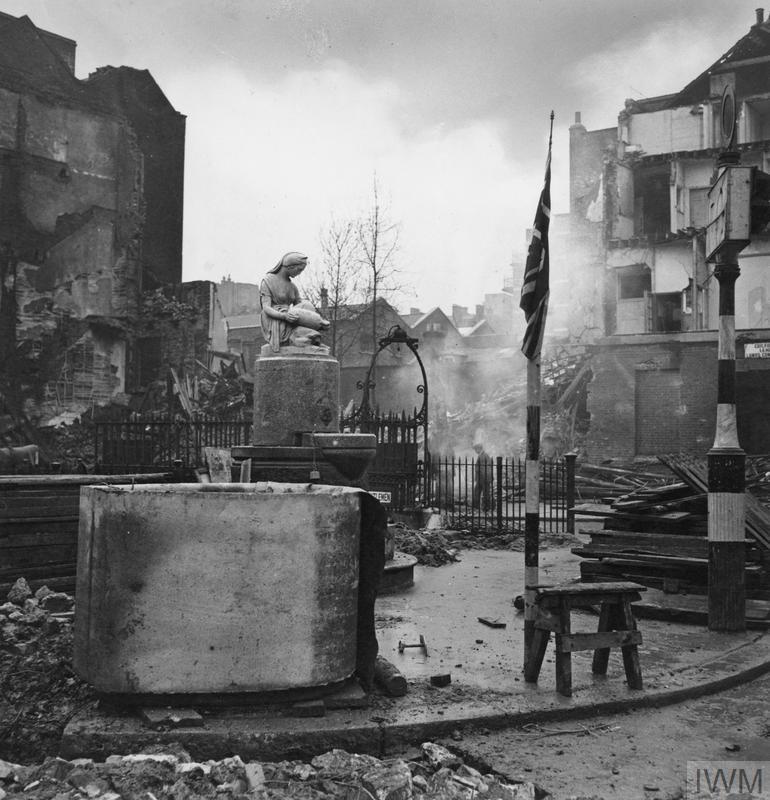
Britain remained in the war. During the Battle of Britain, the Royal Air Force prevented Germany from gaining the air superiority needed for invasion. The German bombing campaign then struck London and other cities in the Blitz. Civilians slept in underground stations, served in fire and rescue units, and returned to damaged streets each morning.
Fighting also spread through North Africa, the Mediterranean and the Balkans. Then, on 22 June 1941, Hitler launched Operation Barbarossa, invading the Soviet Union with more than three million Axis troops. It became the largest land invasion in history and a war of annihilation. German forces advanced rapidly, but distances, Soviet resistance, logistical failure and winter stopped them short of decisive victory.
On 7 December 1941, Japan attacked the American naval base at Pearl Harbor and struck across Southeast Asia and the Pacific. The United States declared war on Japan; Germany and Italy then declared war on the United States. Separate regional wars fused into one global conflict.
5. War Against Civilians and the Holocaust
The Second World War erased much of the boundary between battlefield and home front. Governments mobilised entire economies. Aircraft could reach cities far behind front lines. Occupying armies requisitioned food and labour. Resistance activity brought collective punishment. Siege and starvation became weapons.
No crime more clearly revealed the moral abyss than the Holocaust. Nazi persecution had begun before the war, but conquest placed millions more Jews under German control. Ghettos concentrated Jewish populations in brutal conditions. After the invasion of the Soviet Union, mobile killing units, police and military collaborators carried out mass shootings.
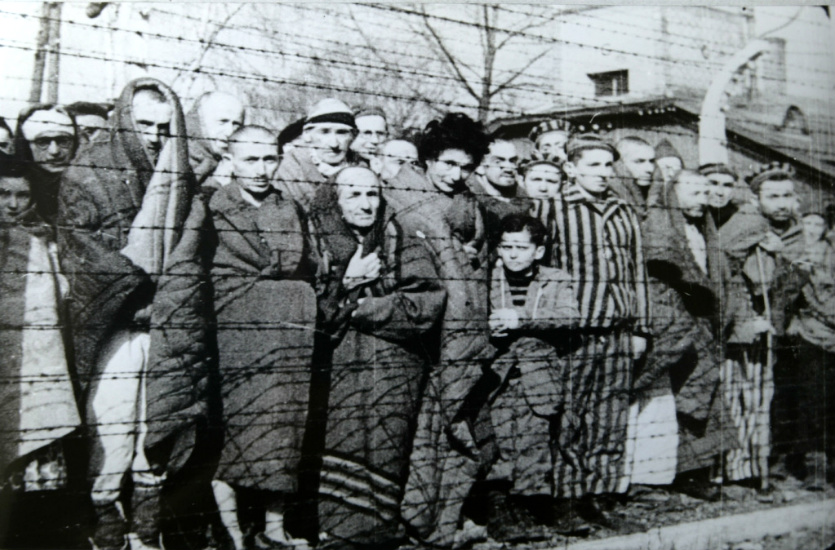
By late 1941 and 1942, Nazi leaders implemented systematic deportation to killing centres in occupied Poland. Auschwitz-Birkenau, Treblinka, Sobibor, Bełżec, Chełmno and Majdanek became places of industrialised murder. Approximately six million Jews were killed. Roma, people with disabilities, Soviet prisoners of war, Polish civilians, political opponents, homosexuals, Jehovah's Witnesses and many others were also imprisoned, exploited or murdered.
The Holocaust was not an accidental side effect of war. It was a state-directed programme driven by racist ideology and enabled by bureaucracy, transport systems, confiscation, propaganda, collaboration and the decisions of thousands of perpetrators.
There was resistance: Jewish uprisings, partisan warfare, hidden children, forged papers, underground churches, diplomatic interventions and ordinary people who risked death to shelter neighbours. Yet rescue was tragically limited. The history asks not only what perpetrators did, but what institutions, communities and individuals saw, ignored, resisted or enabled.
6. The Turning of the Tide
By 1942, the Axis powers had reached their greatest expansion. Then several campaigns changed the direction of the war.
- Midway, June 1942: American carrier aircraft sank four Japanese carriers, weakening Japan's offensive naval power.
- El Alamein, October–November 1942: British-led forces stopped and reversed the Axis advance in Egypt.
- Stalingrad, 1942–February 1943: Soviet forces encircled and defeated a German army after months of catastrophic urban combat. It became a major psychological and strategic turning point.
- Guadalcanal, 1942–1943: Allied forces seized the initiative in the Pacific through a costly campaign of land, sea and air battles.
- Kursk, July–August 1943: Germany's last great offensive in the east failed; the Red Army increasingly drove westward.
Victory was not produced by one brilliant commander or one nation. Allied success depended on immense Soviet sacrifice, American industrial capacity, British survival and intelligence, Chinese endurance, resistance networks, colonial manpower, control of the seas, and cooperation among governments that deeply distrusted one another.
Industry became a battlefield. The United States produced ships, aircraft and vehicles at extraordinary speed. Soviet factories were relocated eastward and continued operating. British scientists, codebreakers and radar networks helped defend the country. The Allies gained crucial intelligence from breaking Axis communications, including work associated with Bletchley Park.
7. D-Day and the Collapse of Nazi Germany
On 6 June 1944, Allied forces crossed the English Channel and landed in Normandy. D-Day was the largest amphibious invasion in history. Airborne troops landed inland; naval guns struck coastal positions; soldiers came ashore on five beaches. At Omaha Beach, American troops faced particularly severe resistance.
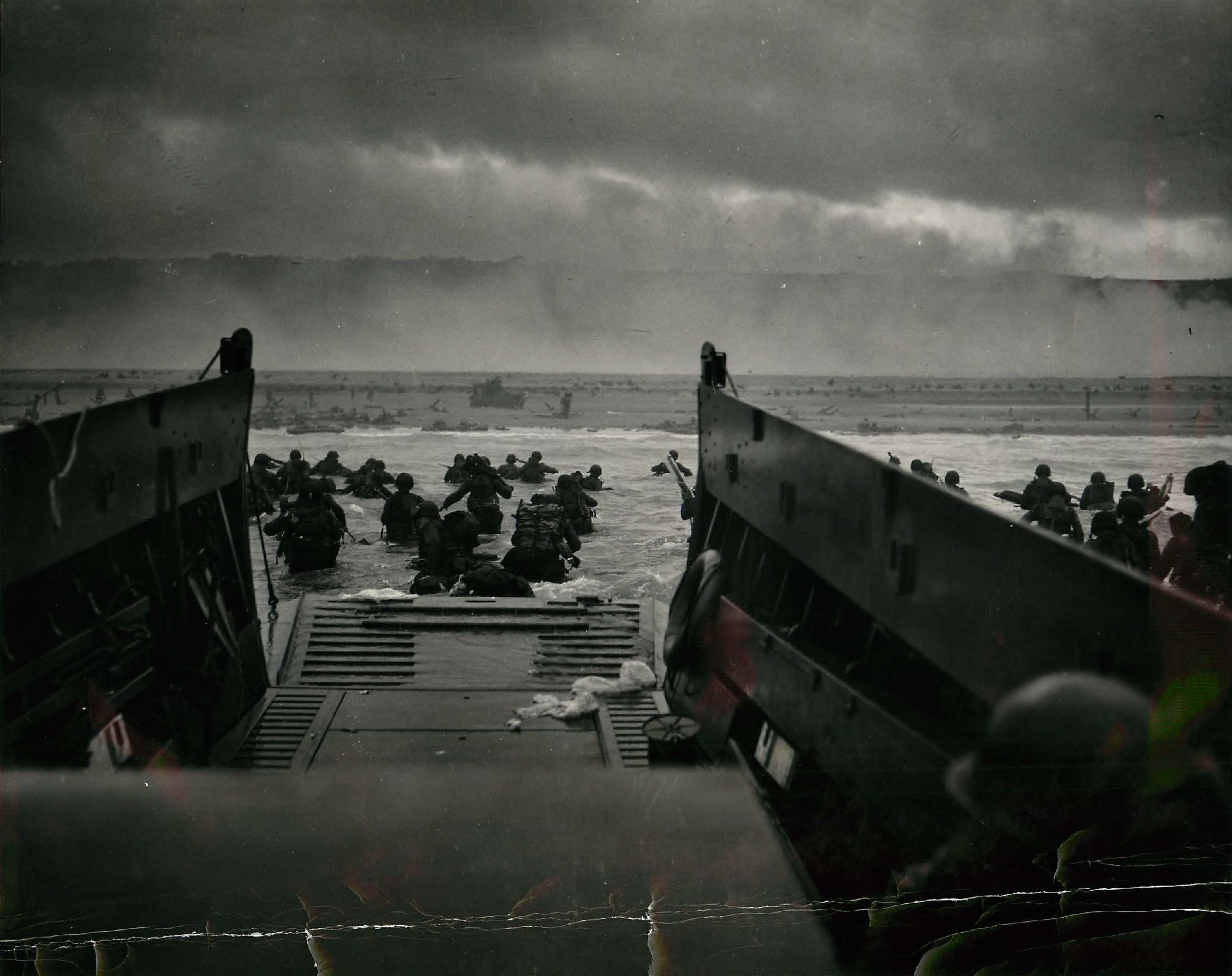
The beachhead held. Allied armies liberated Paris in August and advanced toward Germany. In December, Germany launched a final major western offensive in the Ardennes—the Battle of the Bulge—but failed to break the Allied coalition.
From the east, the Red Army crossed through devastated Soviet territory and Eastern Europe. The scale of death on the Eastern Front was enormous. Soviet soldiers and civilians suffered losses measured in tens of millions, while German occupation had destroyed villages, starved cities and murdered populations.
In April 1945, Soviet forces encircled Berlin. Hitler died by suicide on 30 April. German forces surrendered unconditionally, effective 8 May 1945, celebrated as Victory in Europe Day. Europe had been freed from Nazi rule, but much of the continent lay physically and morally shattered.
8. The Pacific War and the Atomic End
The war against Japan continued. American and Allied forces pursued an “island-hopping” strategy, capturing selected islands to build airfields and bypass stronger positions. Battles at Saipan, Iwo Jima and Okinawa revealed how costly an invasion of the Japanese home islands might be. Japanese cities were subjected to devastating conventional firebombing. Submarine warfare and blockade damaged shipping and supplies.
Meanwhile, the secret Manhattan Project developed the atomic bomb. On 6 August 1945, the United States dropped an atomic bomb on Hiroshima. On 8 August, the Soviet Union declared war on Japan and invaded Japanese-held Manchuria. On 9 August, a second atomic bomb destroyed much of Nagasaki.
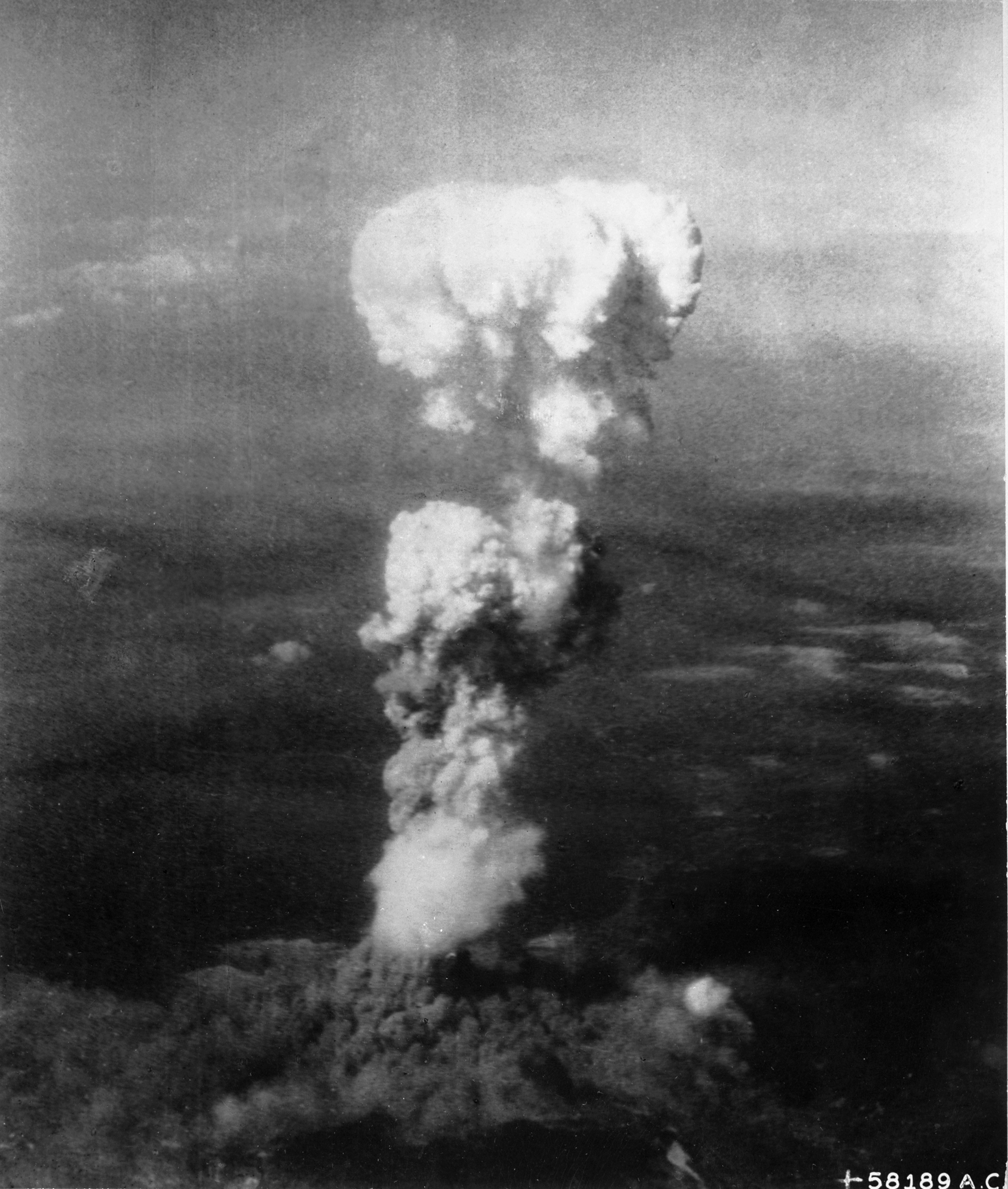
Emperor Hirohito announced Japan's acceptance of surrender terms on 15 August. The formal surrender was signed aboard USS Missouri in Tokyo Bay on 2 September 1945.
Debate over the atomic bombs continues. Defenders argue that they forced rapid surrender and avoided an invasion expected to kill vast numbers. Critics contend that Japan was already weakened, alternatives were possible, civilians bore an unacceptable burden, or Soviet entry played the decisive role. Responsible history should acknowledge the debate while never losing sight of the human beings beneath strategic calculations.
The nuclear age had begun. Humanity could no longer imagine war only in terms of armies defeating armies. A future conflict between great powers might destroy civilisation itself.
9. Destruction on an Unprecedented Scale
Exact casualty figures remain uncertain, but estimates commonly place total deaths at roughly 70 to 85 million people, the majority civilians. The Soviet Union and China suffered especially enormous losses. Poland lost a devastating proportion of its population. Six million Jews were murdered. Millions of soldiers died from combat, wounds, disease, exposure and captivity.
Warsaw, Stalingrad, Manila, Rotterdam, Coventry, Dresden, Tokyo, Hiroshima and countless other cities were shattered. Roads, railways, ports, factories, farms, schools and hospitals were destroyed. Hunger and disease continued after the shooting stopped. Tens of millions became refugees, forced labourers, prisoners, displaced persons or people whose borders had moved around them.
The war also transformed political geography. Germany was occupied and divided. The Soviet Union extended control across Eastern Europe. European empires were weakened, accelerating movements for independence in Asia and Africa. The United States and Soviet Union emerged as rival superpowers, beginning the Cold War.
Trials at Nuremberg and Tokyo prosecuted leading Axis figures. They did not address every crime or eliminate the influence of power in international justice, but they helped establish that aggressive war, war crimes and crimes against humanity could bring individual responsibility. “I was only following orders” could not erase moral and legal agency.
10. Development Born from Necessity—and Its Moral Cost
War accelerated technology because governments invested enormous resources under extreme pressure. Radar improved air defence and navigation. Sonar and anti-submarine methods developed. Aircraft, rockets, jet engines and mass-production techniques advanced. Penicillin was produced on a large scale, saving military and civilian lives. Blood transfusion, trauma surgery, prosthetics and rehabilitation improved. Early electronic computers emerged from codebreaking and calculation needs.
Yet the phrase “the war brought progress” must be used carefully. Many innovations served destruction first. V-2 rockets killed civilians and were built using brutal forced labour. Medical knowledge was accompanied by criminal human experimentation. Nuclear physics produced a weapon before international control existed. Efficient administration and rail transport, normally signs of modern development, were turned toward deportation and murder.
The moral lesson is not that science is dangerous by nature. It is that knowledge multiplies human capacity without automatically improving human character. Technology answers how; it does not decide whether an action is just.
11. How the World Tried to Prevent Another World War
Even before victory, Allied leaders debated the peace that would follow. They knew the League of Nations had failed and that punitive isolation after the First World War had not produced security.
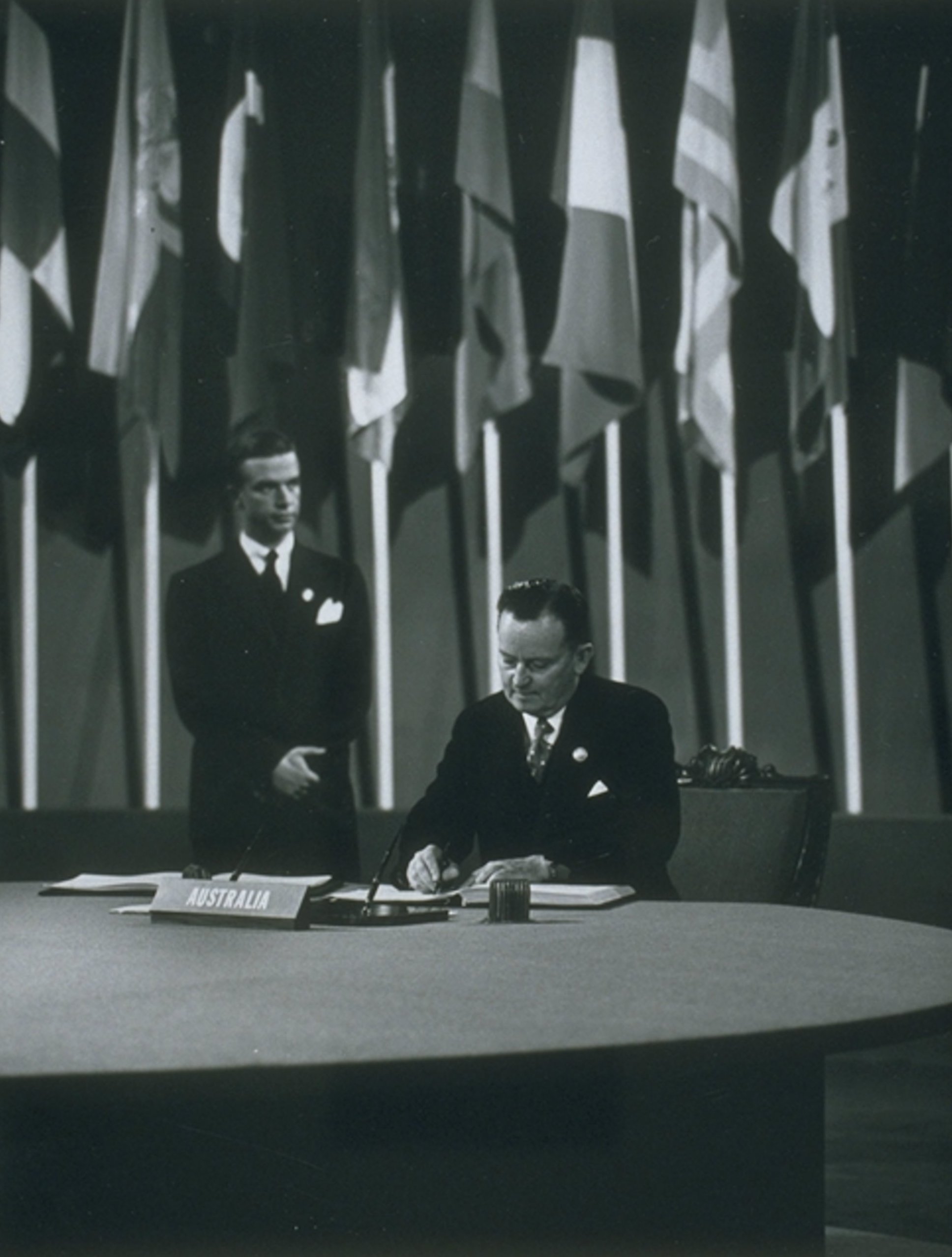
Representatives of fifty countries met in San Francisco from April to June 1945 and drafted the United Nations Charter. It was signed on 26 June and entered into force on 24 October. Its preamble expressed a determination “to save succeeding generations from the scourge of war.”

The post-war system developed several safeguards:
- Collective security: the UN Security Council received primary responsibility for international peace and security.
- International law: the UN Charter prohibited the threat or use of force except in recognised circumstances such as self-defence or Security Council action.
- Human rights: the Universal Declaration of Human Rights in 1948 asserted standards belonging to every person, not merely privileges granted by a state.
- Genocide prevention: the Genocide Convention defined and prohibited genocide.
- War-crimes accountability: the Nuremberg principles influenced later tribunals and the International Criminal Court.
- Economic cooperation: reconstruction, trade and institutions were intended to reduce the desperation and rivalry that feed conflict.
- European integration: former enemies pooled strategic industries and gradually built institutions that became the European Union.
- Arms control and diplomacy: nuclear deterrence, treaties, hotlines and inspection regimes sought to prevent superpower confrontation from becoming catastrophe.
These arrangements have not abolished war. The Security Council can be paralysed by rivalry and vetoes. Powerful states do not always accept equal accountability. Genocide and aggression have occurred since 1945. Nuclear arsenals remain capable of immense destruction.
Still, institutions matter. Diplomacy creates exits before pride makes retreat impossible. Monitoring can expose preparation for violence. Trade and cooperation can raise the cost of aggression. Human-rights law gives victims language and advocates a standard. Peacekeeping and mediation can contain conflicts. None is automatic; each depends on leaders and citizens willing to uphold it.
12. What Humanity Must Learn
First, aggression grows when early violations are normalised. Hitler did not begin with Poland. Each unanswered step made the next appear less dangerous to him and harder for others to resist. Prevention requires courage before a crisis becomes a catastrophe.
Second, propaganda prepares ordinary people for extraordinary evil. The Nazis repeated lies until neighbours were described as contamination and conquest as self-defence. Citizens must learn to test claims, protect truthful institutions and resist language that strips opponents of humanity.
Third, humiliation is unstable soil for peace. Justice matters, but a settlement designed only to punish can preserve grievances for extremists. Durable peace requires accountability, security and a path for societies to rebuild without surrendering truth.
Fourth, indifference is a decision. The Holocaust advanced through fanatical perpetrators, willing collaborators, careerists, frightened conformists and people who decided someone else's danger was not their concern. Moral responsibility includes what we refuse to notice.
Fifth, no nation is morally infallible. The Allies defeated regimes of enormous evil, yet Allied decisions also caused civilian suffering, colonial troops fought for freedoms often denied to them, and the atomic bomb opened a lasting moral controversy. Honest remembrance does not require false equivalence; it requires refusing to turn history into self-congratulation.
Finally, peace must be built continually. Memorial ceremonies are not enough. Peace depends on fair institutions, truthful education, responsible leadership, religious freedom, economic opportunity, justice for minorities and habits of resolving disputes without dehumanisation.
13. What Christians Should Learn
The Second World War confronts Christians with failures inside as well as outside the church. Some believers resisted dictatorship, hid persecuted people, challenged racist ideology, served prisoners and paid with their lives. Others accommodated power, absorbed nationalism into faith, repeated antisemitism or remained silent.
Every human being bears God's image. Genesis 1:27 leaves no room for racial hierarchy or the treatment of a population as disposable. Once dignity depends on ethnicity, nationality, health, usefulness or political loyalty, the strong can redefine who deserves to live.
Christians must test the claims of the state. Romans 13 teaches respect for authority, but Acts 5:29 declares that obedience to God comes first when authority commands evil. Government can restrain wrongdoing; it can also organise it. Patriotism becomes idolatry when national success is treated as the highest good.
Love of neighbour must become costly action. The Good Samaritan did not merely disapprove of violence; he crossed the road, accepted inconvenience and spent resources. In times of persecution, neutrality may protect the comfortable while abandoning the threatened.
Truth is a spiritual responsibility. Jesus called the devil the father of lies. Christians should therefore be slow to forward accusations, suspicious of convenient conspiracy, and determined to speak accurately even when truth embarrasses their own side.
Peacemaking is active, not passive. “Blessed are the peacemakers” does not mean ignoring injustice. Biblical peace joins truth, repentance, protection of the vulnerable, reconciliation and just order. Forgiveness does not erase accountability; it refuses to let hatred become the architect of the future.
Power must be held under judgement. Scientific, military, political and economic strength are tools, not saviours. The cross reveals a kingdom in which greatness serves and sacrifice protects others. A church fascinated by domination can easily bless what Christ calls it to confront.
14. A Timeline of Major Events
- 1931: Japan seizes Manchuria.
- 1933: Hitler becomes German chancellor; Nazi dictatorship is established.
- 1935: Italy invades Ethiopia; Germany announces major rearmament.
- 1937: Full-scale war begins between Japan and China.
- 1938: Germany annexes Austria; Munich Agreement transfers the Sudetenland.
- March 1939: Germany occupies the remaining Czech lands.
- 1 September 1939: Germany invades Poland.
- 3 September 1939: Britain and France declare war on Germany.
- 17 September 1939: Soviet forces invade eastern Poland.
- April–June 1940: Germany conquers Denmark, Norway, the Low Countries and France.
- July–October 1940: Battle of Britain; the Blitz continues afterward.
- 22 June 1941: Germany invades the Soviet Union.
- 7 December 1941: Japan attacks Pearl Harbor; the United States enters the war.
- 1942–1943: Midway, El Alamein, Guadalcanal and Stalingrad turn the strategic tide.
- 1943: Italy's Fascist government falls; Italy surrenders to the Allies.
- 6 June 1944: Allied forces land in Normandy.
- 27 January 1945: Soviet forces liberate Auschwitz.
- 8 May 1945: Victory in Europe after Germany's unconditional surrender.
- 6 and 9 August 1945: Atomic bombs are dropped on Hiroshima and Nagasaki.
- 2 September 1945: Japan signs the instrument of surrender; the war formally ends.
- 24 October 1945: The United Nations officially comes into existence.
15. Final Reflection
The Second World War began when ambition, grievance, racism and lies were joined to military power—and when repeated acts of aggression persuaded their authors that the world would continue stepping aside.
It ended through enormous sacrifice, industrial power, battlefield victory and weapons whose destructive potential frightened even their creators. The peace that followed was imperfect, but its institutions embodied an essential recognition: survival in a connected world requires more than victory. It requires rules, memory, restraint and cooperation.
For humanity, the war warns that civilisation is not self-preserving. Education, science and administration can serve mercy or murder. For Christians, it warns that religious language and respectable institutions are no substitute for faithfulness to truth, the protection of neighbours and the conviction that every life bears God's image.
We honour the dead best not by romanticising war, but by resisting the conditions that make another catastrophe possible: contempt, falsehood, racial pride, unchecked power and indifference to suffering.
Sources and Further Reading
- United States Holocaust Memorial Museum: German Invasion of Poland.
- United States Holocaust Memorial Museum: World War II and the Holocaust, 1939–1945.
- Holocaust Encyclopedia: World War II and the Holocaust.
- United Nations: History of the United Nations.
- Charter of the United Nations.
- United Nations: Peace and Security.